

AI Insights · Timothy · April 2023
Top 5 Health and Fitness Apps in Uruguay Q1 2023
Discover the performance of the top 5 health and fitness apps in Uruguay during Q1 2023, including trends in downloads, revenue, and active users.
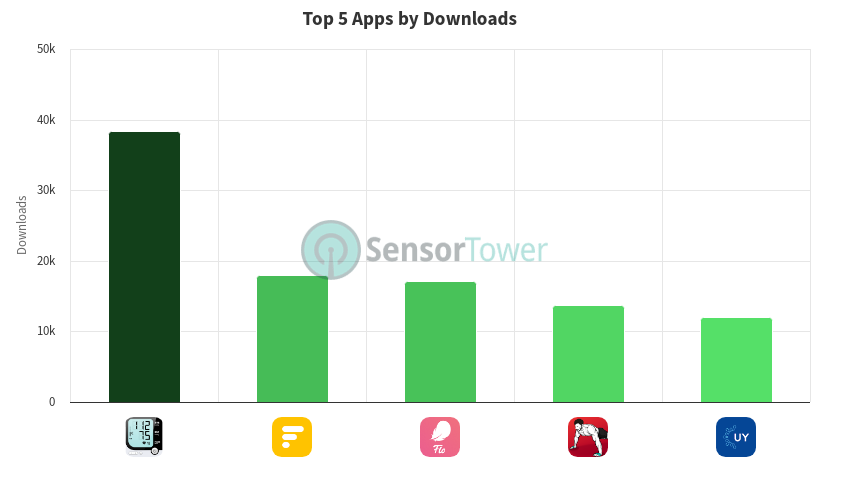
In Q1 2023, the top 5 health and fitness apps in Uruguay showed varying performance trends across downloads, revenue, and active users. Data from Sensor Tower highlights the key metrics for each app.
Blood Pressure App saw a notable fluctuation in weekly downloads, starting at 3.3K in late December and peaking at nearly 4K in late February before declining to around 2.4K by the end of March. Weekly active users followed a similar pattern, increasing from 3.8K to a peak of 4.8K in late February, then dropping to approximately 3K by quarter's end.
Fitia - Diet & Meal Planner experienced consistent growth in weekly revenue, starting from $175 and reaching a high of $534 in early March, before settling at $243 by the end of the quarter. Weekly downloads showed an upward trend, peaking at 1.8K in early March. Active users also increased steadily, from 3.5K in late December to nearly 4.9K in mid-March, ending the quarter at around 4.5K.
Flo Period & Pregnancy Tracker demonstrated a stable performance in weekly revenue, with figures ranging from $725 to $1.1K throughout the quarter. Downloads remained relatively stable, fluctuating between 1.1K and 1.9K. Active users maintained a strong presence, averaging around 35K, with a peak of nearly 36K towards the end of March.
Home Workout - No Equipment had a varied performance, with weekly revenue peaking at $252 in late January and fluctuating throughout the quarter. Downloads started at 925 and saw a decline to 621 by the end of March. Active users remained relatively stable, averaging around 8K, with a slight decline towards the end of the quarter.
Coronavirus UY experienced a downward trend in weekly downloads, starting at 2.9K in late December and dropping to 796 by mid-March, before a slight rise to 1.1K by the end of the quarter. Active users decreased from 77.8K in late December to around 62.5K by the end of March.
For further insights and detailed data, visit Sensor Tower.